
1. What Is a GMA Pallet and Why 48×40?
GMA stands for the Grocery Manufacturers Association, the body that fixed the size which became the trading language of North America: 48 × 40 inches = 1219 × 1016 mm, a 1.24 m² deck. It is also ISO 1 in the ISO 6780 list, so it is a registered standard rather than a mere US habit.
The two numbers are not arbitrary: 48 inches (4 ft) splits an 8 ft US truck width into exactly two rows, and 40 inches keeps that row tight in a trailer with no wasted floor. Any export programme to the US or Canada speaks this size by name — arrive with a different footprint and you are penalised for rack incompatibility or for automated handling that cannot grip the load.
2. GMA vs 120×100 vs 120×80
The differences are smaller than many buyers expect, but their operational effect is large. These figures are calculated from the dimensions themselves:
| Size | Millimetres | Area | Primary use |
|---|---|---|---|
| GMA / ISO 1 | 1219 × 1016 | 1.24 m² | North America and export programmes serving it |
| Industrial / ISO 2 | 1200 × 1000 | 1.20 m² | Egypt, Europe, Asia and ocean containers |
| Euro / ISO 3 | 1200 × 800 | 0.96 m² | Europe (EPAL) and narrow aisles |
- GMA vs 120×100: 19 mm longer and 16 mm wider — only 3% more area. That will not change your shipment, but it does change compatibility with racks set for 48 inches.
- GMA vs Euro: a real gap of roughly 29% more area — reason enough for a US buyer to reject Euro outright.
- Practical direction: in Egypt 120×100 is the base size, which is why we say plainly that GMA is a specialist export size rather than an everyday one.
3. Loads, Height and Design
There is no single "GMA load rating", because capacity is set by board thickness, wood species and stringer count. What North American pallet makers commonly quote for the standard size in a mid-grade hardwood is a dynamic load of at least 2,500 lb ≈ 1,134 kg, with static capacity roughly double that depending on grade. Typical height runs between 140 and 165 mm (5.5–6.5 in).
The common GMA build is 3 stringers + 9 blocks + four-way entry, which is close to our own 120×100 standard design (3 stringers, 9 blocks, 8 deck boards). So if you need GMA, the engineering is not foreign to our line — what changes is the outer dimension and the board layout.
Important: every load figure published on this site is an estimate computed with one unified method, not a factory test certificate. For critical cargo (chemicals, machinery, concentrated loads), ask for a real bending test on a sample before you sign.
4. Does It Cost You Pallets per Container?
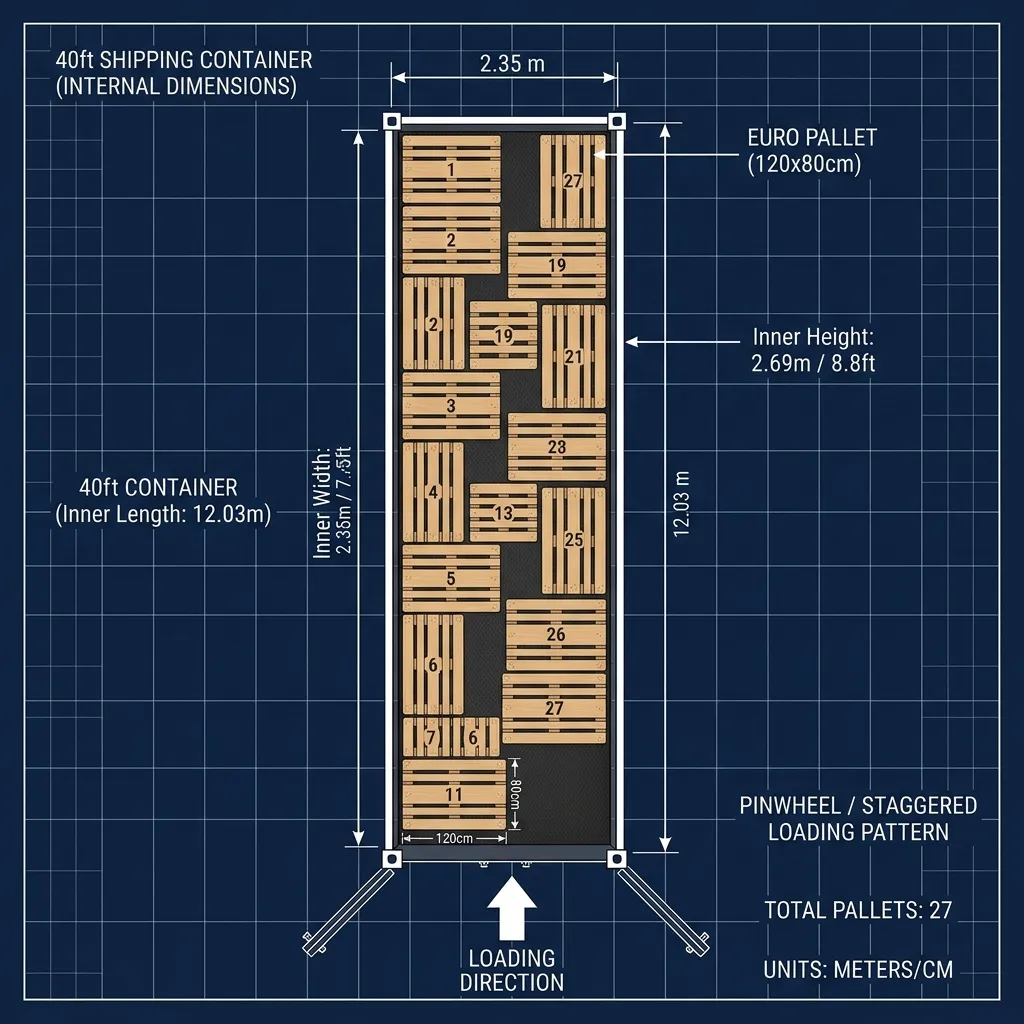
On paper the difference is only 3% of area, but container layouts are not fractions: 1016 mm instead of 1000 mm can block a full cross-row in certain layouts, costing you one pallet per row. Lengthwise, the extra 19 mm means a 40ft container takes 9 rows instead of 10 (12.03 m ÷ 1.219 = 9.87, against 10.02 for the 1200 mm size) — a whole row of cargo. Our rule is simple — decide the size from the stuffing layout, not from the area. Run your cargo dimensions through the container calculator on this site before locking the size, especially for reefer cargo, where the internal width is narrower than a dry container.
On the other side, the wider deck gives cartons and jumbo bags a broader base, which reduces sag and allows more stacking tiers at the same pallet height. The trade-off is between pallets per trip and cargo safety.
5. When Do You Actually Need GMA?
- A US or Canadian buyer who specifies 48×40 in the contract or in their supplier manual.
- Racking or automated storage set for 48 inches — here the 19 mm gap becomes a reason for rejection at intake.
- Shipments repacked in a US warehouse that runs the same size internally.
- When you do not need it: a European customer (Euro fits better), Egypt, the Middle East or the Gulf (120×100 is the norm), or an LCL shipment that will never touch a US rack.
6. Common Mistakes When Ordering GMA from Egypt
- Confusing 120×100 with GMA: the numbers are close (1.20 vs 1.24 m²), so some suppliers ship 1200 × 1000 and call it GMA. A US buyer checks millimetres, and the rejection happens at intake, not at loading.
- Ordering in inches only: "48×40" is not a full spec — convert it to millimetres (1219 × 1016) with an explicit tolerance, or every factory will cut it to its own idea of the size.
- Ignoring height: pallet height decides how many tiers fit a container. A 140 mm pallet and a 165 mm pallet differ by centimetres in total stack height — sometimes a whole tier.
- Ignoring deck board spacing: small cartons sag between widely spaced boards. If you ship cartons, ask for a tighter deck or a closed top.
- Assuming treatment happens automatically: heat treatment and the IPPC stamp must be scheduled before production, not added on shipping day.
7. Checklist Before You Request a Quote
- The exact size in millimetres (not inches alone) plus the tolerance you accept.
- Dynamic, static and racking load, and the storage method (floor, racking, stacking).
- Stringer and block count, and the entry type (2-way or 4-way).
- Deck board thickness and width — and whether you need a closed deck for small cartons.
- Treatment: HT or MB depending on the importing country, IPPC stamp, and the paperwork required.
- Monthly volume and delivery plan — our volume discounts start at 1,000 pallets per month, with no strict minimum order.
For a quick cross-check, the 120×100 industrial pallet page carries the full dimensions and load table, and the pallet dimensions guide lists all six international sizes to take into the meeting.