
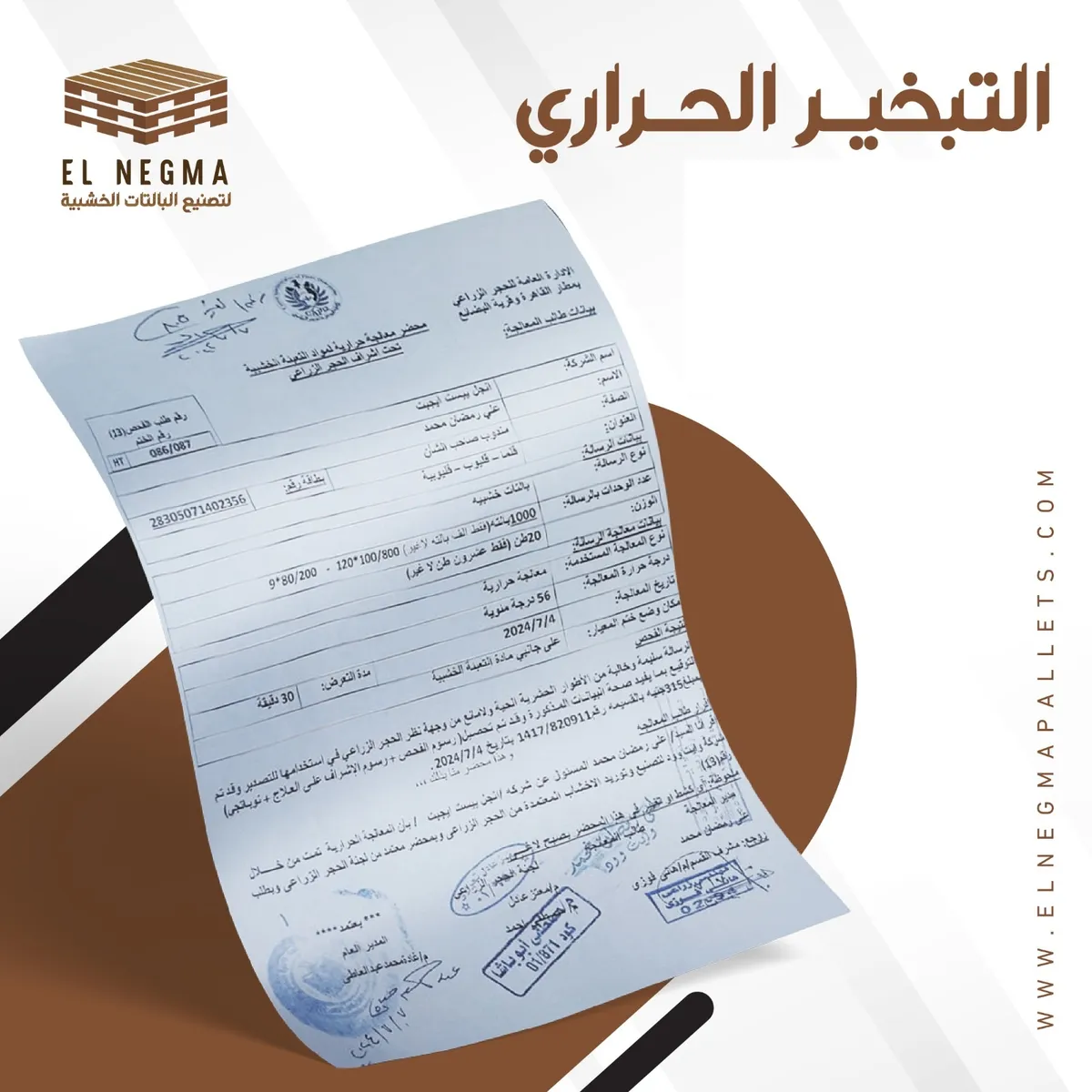
1. Heat Treatment (HT)
Heat Treatment (HT) relies on placing wooden pallets inside special industrial kilns and pumping hot air until the core temperature of the wood reaches at least 56°C and maintaining it for 30 minutes.
Strategic Advantages: A process completely free of chemicals and toxic gases, 100% safe and compliant with food and pharmaceutical export standards, globally accepted without customs restrictions, and contributes to drying the wood to reduce moisture content and prevent mold and fungi growth during long sea voyages.
2. Methyl Bromide (MB) Fumigation
The treatment is carried out by isolating the wood and injecting toxic methyl bromide gas in specific doses under tarpaulins or in sealed containers for 24 to 48 hours.
Decline and International Restrictions: This gas is classified as an ozone-depleting substance under the Montreal Protocol, and its use is heavily restricted or banned in the EU and many destinations — always verify the destination country's current rules before choosing MB, due to strict controls on treated shipments.
3. Quick Comparison: HT vs. MB
| Difference | Heat Treatment (HT) | Methyl Bromide (MB) |
|---|---|---|
| Eradication Mechanism | Natural heat (56°C in wood core) | Toxic, tissue-penetrating chemical gas |
| Treatment Duration | 30 - 60 minutes only | 24 - 48 hours (including aeration) |
| Environmental Impact | 100% safe, clean, and sustainable | Ozone-depleting (internationally restricted) |
| Customs Acceptance | Widely accepted, subject to each destination's current rules | Restricted or banned in the EU and several other countries — verify destination rules |