
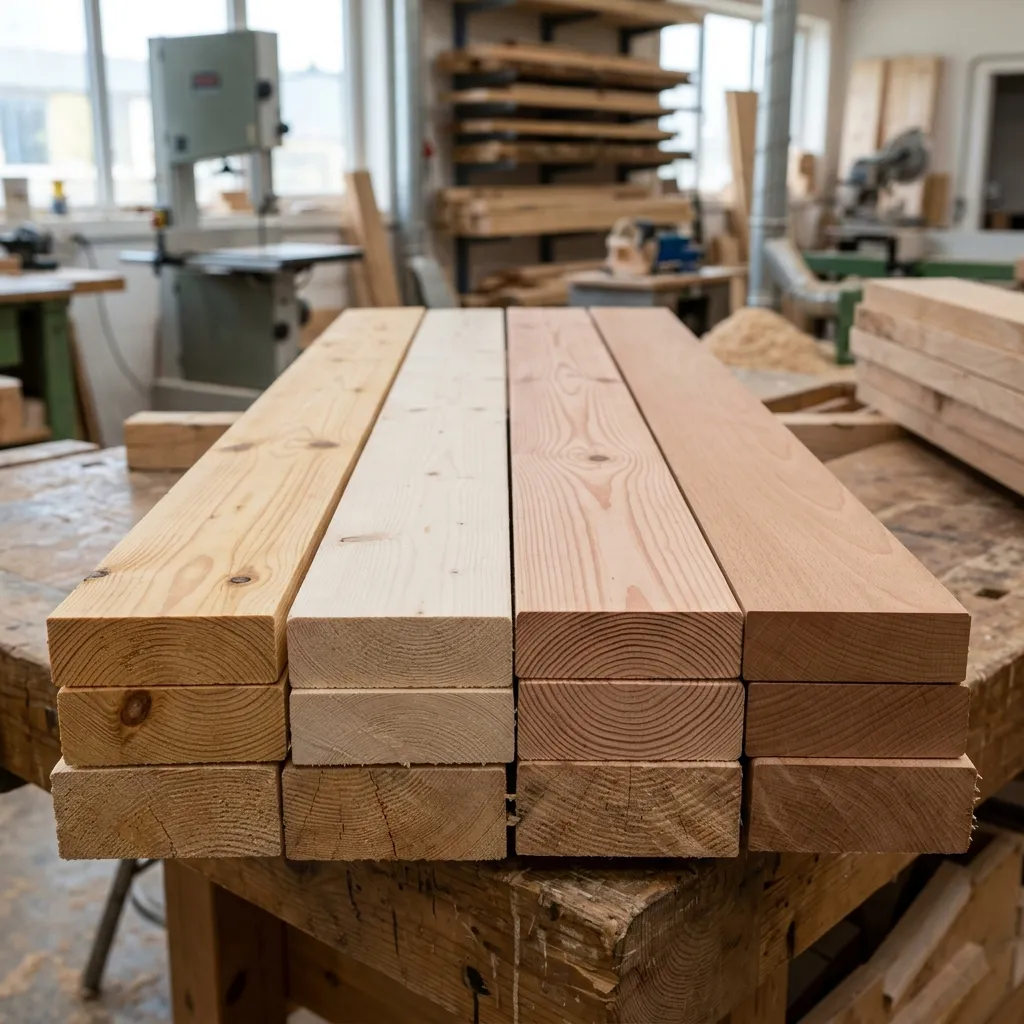
1. Why Wood Type Matters for Pallet Quality
Selecting the right wood types for pallets is key to determining its service lifespan, dynamic load capacity, and international export eligibility. A poorly manufactured pallet made from substandard lumber can break during transit, risking product loss. That is why procurement directors learn the trade-offs of different wood types for pallets before purchasing.
2. Timber Varieties Used in Egyptian Pallets
Timber used in pallet manufacturing Egypt is classified into several key categories:
- Swedish Pine (Spruce/Pine): Commonly referred to as "swedish pine pallet wood" in the local Egyptian market. It provides standard dynamic load capacities (up to 1,500 kg) with low weight, making it excellent for fruit, vegetable, and food exports.
- Musk Wood (Redwood): An economical softwood ideal for one-way export shipments where pallets are not returned. It offers a great balance of cost and load rating.
- Whitewood: Soft, lightweight timber commonly used for light-to-medium cargo. Highly compatible with European standard timber regulations.
- Beech Hardwood: Extremely strong and heavy timber reserved for heavy-duty cargo like industrial machinery, marble slabs, or ceramics. Supports dynamic loads well above 2,000 kg.
3. Choosing the Right Wood for Your Shipment
Select the **best timber for pallets** depending on your products and route:
- Fresh Produce & Citrus: Swedish pine or whitewood — lightweight, cost-effective, and moisture-controlled.
- Marble & Heavy Metals: Hardwood beech or thick, reinforced pine — boards must be at least 22mm thick.
- Chemicals & Solvents: Moisture-resistant timbers treated to ensure zero absorption of liquid chemical leaks.
4. Thickness and Moisture Rules for Export
Regardless of wood species, two technical rules must be met for export compliance:
- Board Thickness: Standard pallets use 18mm to 22mm deck boards. At El Negma, we build custom specs with board thickness up to 25mm based on industrial client requirements.
- Moisture Control: Under ISPM-15 regulations, lumber moisture must not exceed 22%. Lower moisture prevents mold and fungal growth inside sealed shipping containers during sea voyages.
At El Negma Pallets, we source premium imported logs and dry them to strict specs, ensuring our new wooden pallets meet global cargo quality guidelines.