
Why Pallet Supplier Selection is Critical
Not all wooden pallet factories in Egypt are equal in quality. Choosing the wrong supplier means production delays, broken cargo in the warehouse, and containers rejected by customs. This guide provides 6 concrete criteria to evaluate any manufacturer before signing a contract.
1. Monthly Production Capacity & Reliability
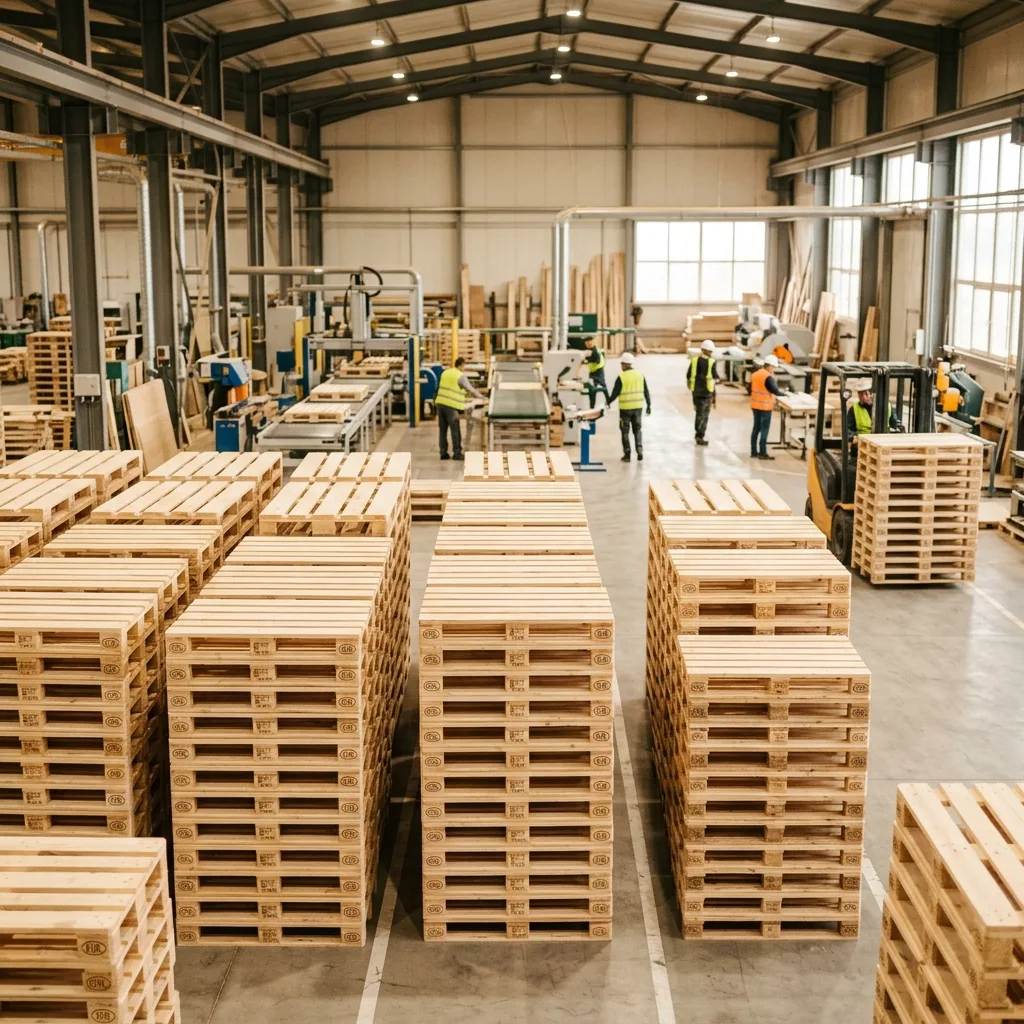
Ask directly: How many pallets do you produce monthly? A supplier that cannot match your volume will delay your production lines. A reliable manufacturer maintains a high production capacity and steady timber supply to guarantee structural uniformity.
El Negma Pallets: We produce large monthly volumes to meet large and urgent demands of factories and exporters.
2. Quality Certifications & ISPM-15 Stamp
If you export, ISPM-15 compliance is not optional—it is a legal requirement. Ask the manufacturer for official heat treatment (HT) certifications approved by the Egyptian Ministry of Agriculture. Uncertified pallets will lead to container rejection at international ports.
3. Timber Quality, Moisture & Nail Compliance
Not all timber is equal. Request a physical sample before placing large orders and inspect the following metrics:
- Moisture Content: Wood must be kiln-dried below 22% (ISPM-15 limit). Wet wood warps, shrinks, and grows mold during long ocean transit.
- Sizing Accuracy: Ensure the deck boards and stringers have consistent thickness across the batch.
- Nailing Quality: Check if they use ring-shank or screw-shank nails countersunk properly to prevent snagging cargo.
- Load Capacity: Verify that the pallet handles your cargo’s dynamic and static loads without bending.
4. Customization & Technical Drawings
Standard sizes (Euro, GMA) fit many scenarios, but some industrial setups need custom dimensions. A qualified manufacturer designs custom dimensions accurately without exorbitant charges.
Make sure to draft precise and detailed specifications for all required pallet dimensions, and request a physical sample that exactly matches these specs before starting mass production to avoid sizing mismatches or structural flaws.
5. Lead Times & Emergency Buffer Stock
Your production lines must not stop due to a supplier delay. Ask about standard lead times and if they maintain safety buffer stocks for emergency requests. Verify their reputation with existing long-term clients.
6. Pricing Transparency & Clear Quotations
Beware of hidden costs that change upon delivery. A reliable supplier provides clear itemized pricing including timber costs, heat treatment fees, and logistics/shipping rates.
Conclusion: Do not choose based on price alone! The cheapest pallet can cost you ten times more in damaged merchandise, customs delays, or line stoppages. Evaluate these 6 criteria and select a supplier that guarantees continuity.