
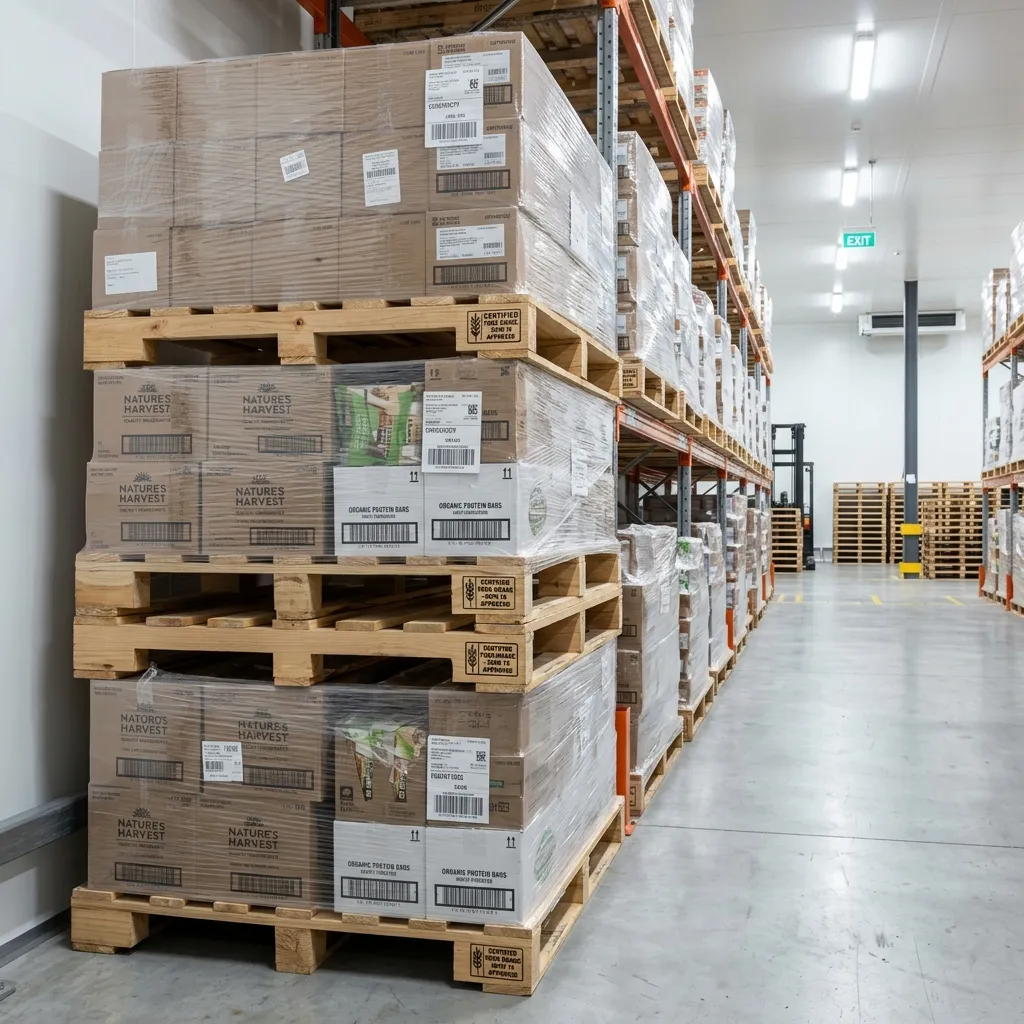
1. Why Food & Pharma Pallets Are Different
Food grade wooden pallets are among the most regulated items in the supply chain. Millions of tons of food products and pharmaceutical goods travel on pallets each year, yet a standard wooden pallet can pose a serious contamination risk if it doesn't meet strict requirements for wood type, treatment method, moisture content, and chemical-free certification.
Countries that import Egyptian food products — including EU nations, the USA, and Gulf countries — enforce strict pallet hygiene laws. Non-compliance can result in an entire shipment being rejected and destroyed at the importer's cost.
2. Key International Standards (BRC, IFS, FDA)
- BRC (British Retail Consortium): Requires pallets used in BRC-certified food facilities to be free from cracks, protruding nails, and microbial contamination. New or ISPM-15 HT-certified pallets are strongly preferred.
- IFS (International Food Standard): A German/French standard that requires full documentary traceability for every pallet batch entering production lines, including timber species and HT certificate numbers.
- FDA Requirements (USA): While the FDA does not fully prohibit wood, it requires timber packaging to be "fit for purpose" and non-absorbent in ways that create contamination risks. ISPM-15 compliance is mandatory for all imports into the US.
3. Specifications of a Food-Safe Pallet
For a pallet to qualify as food safe, it must meet these key criteria:
- HT-Certified Softwood: European or Swedish pine heat-treated to ≥56°C core temperature for 30 minutes — eliminating pests without harmful chemical residues.
- Moisture Content ≤ 19%: Low moisture prevents mold, bacteria, and fungal growth that threaten product integrity during refrigerated or ambient storage.
- No Protruding Nails: Any loose or raised nail creates a physical contamination risk and must not be present in food-grade pallets.
- No Paints or Chemical Treatments: Pallets for food and pharmaceutical use must never be painted or treated with non-food-safe chemicals.
- HT Treatment Only (Not MB): Methyl bromide fumigation is banned for food-grade pallets under global food safety regulations.
El Negma Pallets Factory manufactures new food-grade pallets from certified European softwoods with full moisture control and issued HT certificates, serving Egyptian exporters to EU, Gulf, and US markets.
4. Risks of Using Used Pallets for Food Products
- Unknown Contamination History: A used pallet may have previously carried pesticides, chemicals, or hazardous goods. This unknown history makes it fundamentally unsafe for food contact.
- Hidden Fractures: Micro-cracks in used timber harbor bacteria and mold even after surface cleaning.
- Audit Failure Risk: BRC and IFS audits include pallet inspections. Failing to use compliant pallets can result in total loss of the international food safety certificate.
- Port Rejection: Germany, France, UAE and others actively reject food shipments transported on pallets lacking a valid HT stamp or showing damage signs.