

1. Standard Container Dimensions & Available Inner Volume
Logistical success in exporting depends on optimizing the internal dimensions of the container. While shipping containers are named after their external length (20ft and 40ft), actual internal dimensions dictate loading capacity:
- Standard 20-Foot Container (20' GP): Inner Length: 5.90 m (5898 mm) | Inner Width: 2.35 m (2352 mm) | Inner Height: 2.39 m (2393 mm) | Door Opening Width: 2.34 m.
- Standard 40-Foot Container (40' GP): Inner Length: 12.03 m (12032 mm) | Inner Width: 2.35 m (2352 mm) | Inner Height: 2.39 m (2393 mm).
- 40-Foot High Cube Container (40' HC): Inner Length: 12.03 m | Inner Width: 2.35 m | Inner Height: 2.70 m (2698 mm) - provides 30 cm of extra vertical clearance, crucial for double-stacking.
- 40-Foot Refrigerated Container (40' Reefer): Inner Length: 11.58 m (11583 mm) | Inner Width: 2.29 m (2286 mm) | Inner Height: 2.25 m (2250 mm). Its volume is slightly reduced due to thick insulation panels and bottom T-bar flooring.
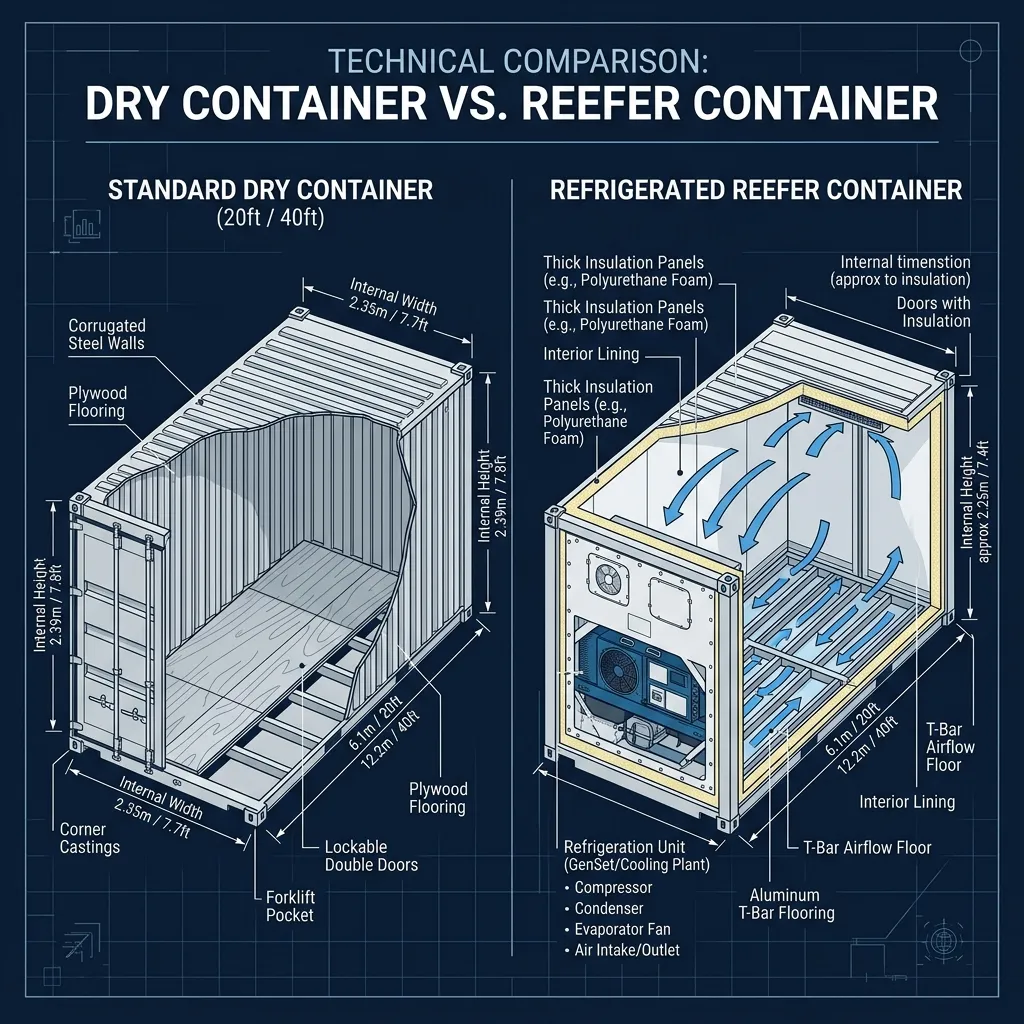
Figure 1: Engineering comparison between a standard dry container and an insulated reefer container with airflow channels
2. Capacity Table: Euro vs Standard Pallets
The number of pallets that can fit in a single floor layer depends on the pallet dimensions and container type. The following table highlights the maximum safe loading capacities:
| Container Type | Euro Pallets (80×120 cm) | Standard GMA Pallets (100×120 cm) | Operational Notes |
|---|---|---|---|
| 20' Dry Container | 11 pallets (pinwheel) | 10 pallets (inline) | Max safe payload ranges from 21 - 22 tons. |
| 40' Dry Container | 24-25 pallets | 21 pallets | Ideal for medium-density goods. |
| 40' High Cube | 25 pallets (floor layer) | 21 pallets (floor layer) | Allows double-stacking for light cargo, doubling the capacity. |
| 40' Reefer Container | 22-23 pallets | 20 pallets | Must leave 12 cm at the top for airflow circulation. |
3. Mechanical Loading Patterns (Spatial Distribution)
Because a standard container's inner width is 2.35 m, it is impossible to place two Euro pallets (1.20 m length) side-by-side lengthwise (1.20 + 1.20 = 2.40 m, which exceeds container width by 5 cm). To bypass this challenge, logistics planners use:
- Inline Pattern (النمط الطولي): All pallets are oriented with their 120cm side pointing forward. This only fits 10 pallets in a 20ft container, leaving unutilized voids.
- Pinwheel Pattern (نمط الطاحونة): Pallets are oriented alternately (one lengthwise, one crosswise). This pattern utilizes the missing 5 cm and increases a 20ft container's capacity to 11 Euro pallets and a 40ft container to **24 or 25 Euro pallets**.
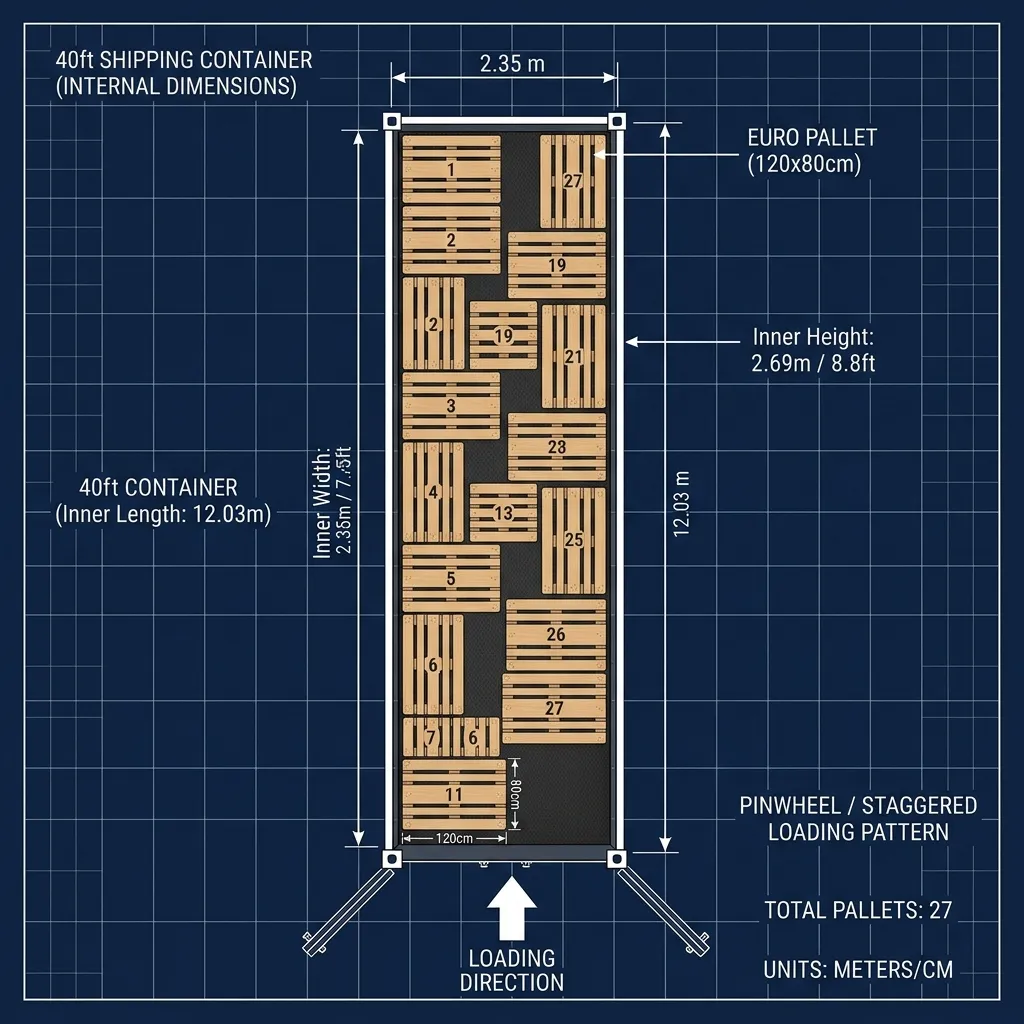
Figure 2: Staggered pallet distribution layout to eliminate volumetric empty space inside shipping containers
4. Double-Stacking Physics & Height Limits
For lightweight or medium weight products (such as plastic packaging or corrugated boxes), double-stacking pallets halves shipping costs. To do this safely, apply the height clearance equation:
In 40ft High Cube containers, the inner height is 2.70 m (2700 mm). If a wooden pallet with its loaded cargo is 1.25 m high, double stacking gives a total height of 2.50 m (2500 mm). Adding the safety clearance of 15 cm, 2.65 m is safely under the limit, making it highly feasible.
⚠️ Warning: Double stacking is strictly discouraged for hazardous chemicals, liquids, or fragile goods (such as ceramics and marble) to prevent structural collapse and center of gravity offset.
5. Weight Distribution & Dynamic Stability
A common logistical error is stacking heavy loads in the far front or rear of the container. This concentrates structural stress, risking floor damage and road weight violations at destination ports.
The Golden Rule of Weight Distribution: The cargo's center of gravity must align exactly with the container's geometric center. For heavy loads (e.g., granite and marble), where the maximum weight limit (e.g., 22 tons) is reached with only 10 heavy block pallets, the pallets must be distributed along the length of the container and lashed in place, leaving symmetric spaces at the ends.
6. Cargo Securing & Void Prevention (Dunnage & Lashing)
Even with correct spatial loading, slight gaps (5 to 15 cm) remain. Ocean transit waves cause continuous dynamic vibrations, making pallets drift and collide. To secure cargo:
- Dunnage Bags: Heavy-duty inflatable air bags placed in gaps and inflated to absorb shocks and prevent shifting.
- Lashing Belts: High-tensile polyester straps securing the last rows of pallets near the doors to container floor anchor rings.
- Anti-Slip Mats: Rubber sheets placed under wooden pallets to increase friction by 60%, preventing movement during sudden deceleration.